

“We shall not cease from exploration
And the end of all our exploring
Will be to arrive where we started
And know the place for the first time.”
T.S. Eliot
The constant use of symbols and metaphors in mythology reminds us that analogy was a fundamental mode of inquiry in the ancient world. Pattern recognition formed the basis of knowledge. We sensed we were woven into an interconnected web of life, death, and rebirth set by universal laws, where the human body, earth, and the cosmos are different expressions of the same underlying order. It is summed up in the concept of the microcosm and macrocosm, or “as above, so below,” and perhaps finds its simplest expression in the maxim “Know thyself” inscribed at the Temple of Apollo at Delphi. To know oneself, in this older sense of inquiry, was to seek the principles that ordered everything else.
Of all the mysteries contained within the body, the most consequential, and indeed the most mysterious, is its own creation. If the same laws govern generation at every scale, the development of life within the womb offers a privileged glimpse into the creation of all life in the universe.
In 2002, Swiss psychoanalyst Franz Renggli published an article in the Journal of Prenatal & Perinatal Psychology & Health called “The Sunrise As The Birth Of A Baby: The Prenatal Key to Egyptian Mythology,” which captures an aspect of ancient inquiry often lost in modern interpretations of myth. Agrarian, psychological, historical, and solar interpretations may all illuminate the material, but without recognizing the extent to which human anatomy and development supplied models for understanding nature and the cosmos, they are incomplete.
Renggli brings together two twentieth-century researchers who approached this problem from different directions. The Dutch historian of religion Bruno Hugo Stricker argued that ancient Egypt “tries to understand the development of a baby in the womb of its mother as a basis to comprehend the origin of the world” in his five-volume opus De Geboorte van Horus (The Birth of Horus), published between 1963 and 1989. British psychologist Francis J. Mott arrived at remarkably similar territory from the opposite direction: beginning with the interpretation of dreams, he developed a prenatal psychology that eventually extended from personal symbolism into myth and religion.
Both converged upon the motif of the radiant, shining hero.
The Night Sea Journey
In 1904, the German ethnologist Leo Frobenius published Das Zeitalter des Sonnengottes (The Age of the Sun God), where he identified a recurring mythological pattern he called the “Night Sea Journey,” an archetype that would later become important to Carl Jung, particularly in Psychology of the Unconscious. Essentially, and it may sound quite familiar to the reader, it describes the universal solar hero who is swallowed by a monster in the West, carried within its belly through the darkness beneath the world, and released again in the East with the rising sun. In Frobenius’s fuller sequence, the swallowed hero kindles a fire inside the monster, attacks it from within, and finally cuts his way free at sunrise.
Jonah disappears into the belly of the whale and returns alive; Christ enters the tomb and rises again. Heracles is swallowed by the sea monster and emerges alive. The Finnish hero Väinämöinen is swallowed by the giant Antero Vipunen and eventually cuts his way out from within. Among the Tlingit of the Northwest Coast, Raven enters the belly of a whale carrying a knife and the means to make fire, kindles a fire inside the animal, kills it from within, and eventually emerges after its body reaches shore.
Frobenius interpreted this archetype as a metaphor of the sun and its return. The monster’s belly is the darkness through which the sun travels, while the fire kindled within it and the hero’s eventual escape correspond to the recovery of solar light. The myth gives human form to a cosmic event repeated before our eyes every day.
Jung’s innovation was to turn Frobenius’s ethnological observation inward. The sun’s disappearance was also a movement of the psyche. The hero being swallowed represented a withdrawal from the external world and descent into the unconscious. The struggle within the monster represented adaptation to that interior world, and his emergence at sunrise represented renewed psychological progression. The hero, as Jung put it, was the “symbolic exponent” of the movement of libido, or the animating life-force of the individual. The Night Sea Journey thus became a model of psychological death and rebirth.
Joseph Campbell would later incorporate this pattern into what he called the “belly of the whale” stage of the hero’s journey: the threshold at which the hero is swallowed into an unknown world and appears, from the perspective of ordinary life, to have died, and will eventually be replaced by a transformed individual. So the solar myth had become a comparative framework for initiation in which descent, enclosure, transformation, and rebirth are pillars. Campbell continued to describe them psychologically, as journeys into neglected or unconscious regions of the self, explicitly invoking Frobenius’s “night sea.”
The recurrence of this pattern across solar, agricultural, and psychological interpretations suggests a significance broader than any one of them alone. If sunrise, germination, birth, and renewal were manifestations of the same generative principle, then the Night Sea Journey could operate simultaneously on multiple levels. As the sun descends beneath the horizon, the seed disappears into the soil, and the fetus develops invisibly in the womb of its mother, each is enveloped by darkness, undergoes an unseen transformation and, under the right conditions, emerges again into light.
This is precisely what myth preserves well. Before knowledge was divided into our modern categories of astronomy, psychology, medicine, religion and folklore, a story could bind observations from several domains into a single memorable image. To call the Night Sea Journey a “solar myth” therefore describes its most visible surface without necessarily exhausting its meaning. Likewise, to call it an archetype of psychological rebirth tells us something profound about its resonance without necessarily revealing why this particular sequence of images became so powerful in the first place.
There is, after all, one journey through aquatic darkness taken by every human being.
The Myth of the Shining One
Prenatal psychology is a school that sprang from the first generation of psychoanalysts and was strangled in the cradle (or in the womb if you like) by psychoanalysis’s own forefather, Sigmund Freud, who felt that the ideas of a mind before birth and unconscious uterine memories contradicted his own theory of psychology and became adamantly opposed to it. After publishing The Trauma of Birth in 1924, Otto Rank was ousted from the psychoanalytic school by Freud, leaving prenatal psychology marginalized for decades. It remains an understudied field.
Some were compelled to explore it in obscurity nonetheless. Francis J. Mott was one of them. His research led him to take Jung’s observation of the rebirth imagery in the solar myth a step further.
Mott mined the biology of generation for principles that could be extended into psychology, dream symbolism, and mythological archetypes, while tracing the same patterns outward into nature and the cosmos. This continuity across scales was what he called “the universal design of creation.”
Mott developed, independently and accidentally in my estimation, an approach to inquiry that largely mirrored ancient methods “in which Science and Religion meet and join their forces without arbitrary adjustment,” using dreams and myth for scientific inquiry and vice versa.
Central to Mott’s theory was what he called the “fetal skin feeling.” The idea begins with a simple reversal in bodily geometry. After birth, we experience the skin as our periphery, the boundary at which the body ends and the external world begins. Before birth, Mott argued, the relationship is different. The fetus occupies the center of an enclosing maternal sphere. As he put it, “Before birth the skin is the surface of a nucleus that is lying within the periphery of the maternal womb.”
Mott interpreted the fetal skin as a kind of primary sense organ, an “overall organ of touch” immersed in a limited watery environment and acted upon from every direction. Before the specialized senses divide experience into sight, sound, smell, taste, and localized touch, he imagined an earlier and more unified bodily condition in which the surface of the fetus encounters its surrounding world as a whole. He went so far as to locate the earliest physical basis of the ego here. The first rudimentary sensation of being an “I,” he argued, arose from the unified feeling of a sensitive nucleus distinguished from, yet completely enclosed by, its surrounding medium.
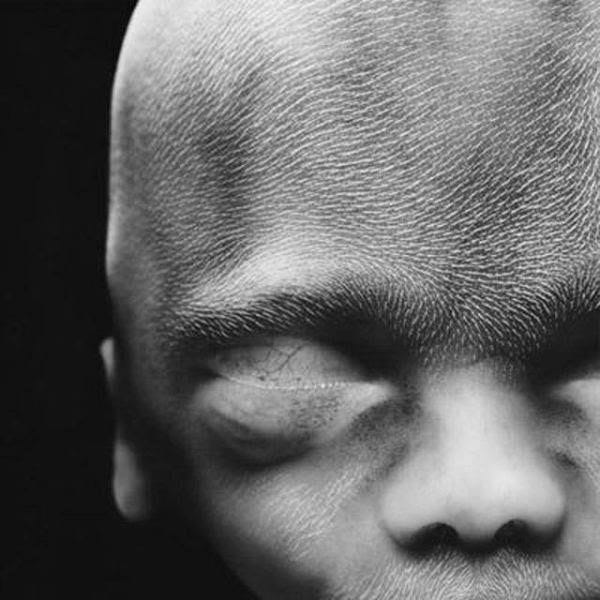
The physical details of the fetal body became important to this theory. Its skin is covered for part of gestation by lanugo, a coat of exceedingly fine hair, making the body sensitive to its surround and giving the fetus sensation in all directions, like a shining nucleus in a dark cave. Beneath the lanugo lies vernix caseosa (literally “cheesy varnish”), a waxy coating that protects the skin within the amniotic waters and, importantly for Mott, electrically insulates it. He came to associate this sensitive, insulated surface with the electrical activity generated by the fetal heart. The heart is the center, and the skin is the surface on which its activity was registered. In his mature formulation, the skin was therefore the “organ of the heart’s nuclear function.”
Mott noticed what he called a “resonance between the fetal skin feeling and the sun.” In his mythology, “The Shining One,” the god whose skin or hair gleams, was the unborn child “bearing the impress of cosmic radiance.” Elsewhere he described the fetus as a “shining nuclear focus” within the sphere of the womb, its skin a “coat of shining power.”
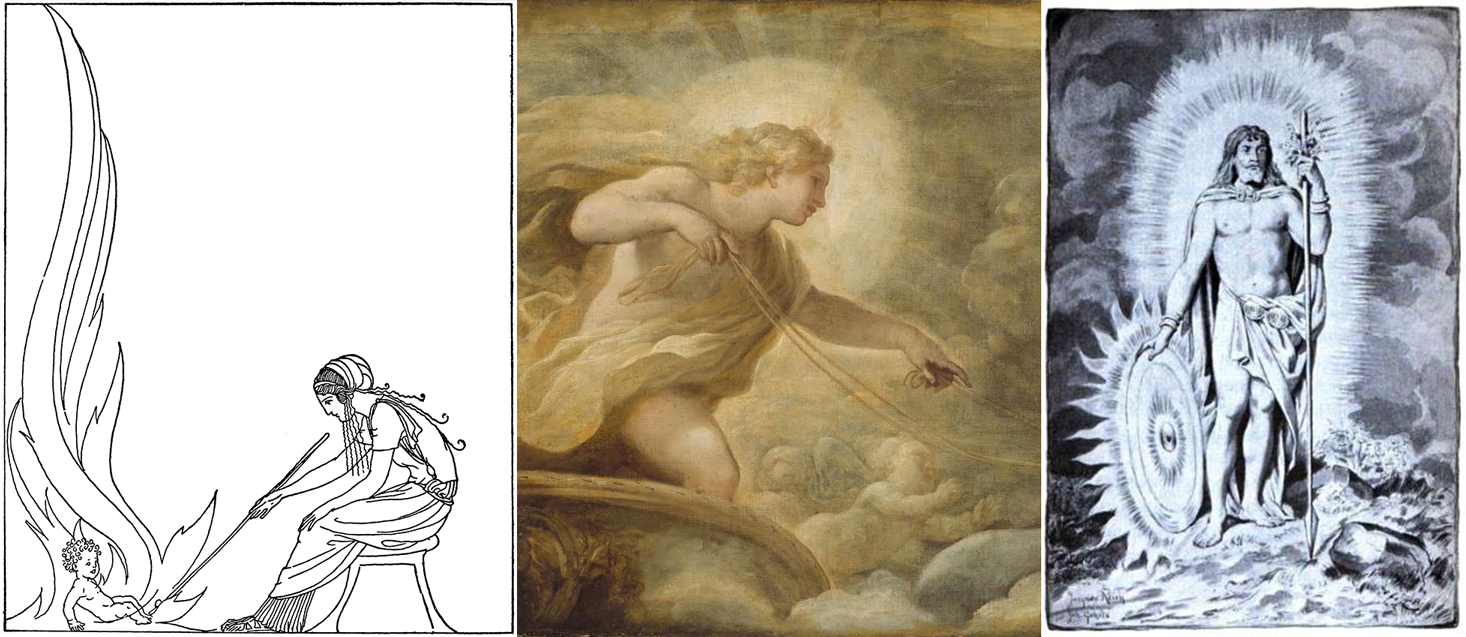
Mott’s initial breakthrough occurred when the myth of Argus Panoptes (skin with one hundred eyes in Greek mythology) overlapped with some of his clients’ dreams he had been recording and developing his theories with. Once he began looking for this image, he found it everywhere. The Hindu fire bringer Matariçvan is “the one swelling in the mother.” Dionysus is born amid lightning fires. Demeter places the infant Demophon into the fire each night to burn away his mortality. Isis does much the same with the infant prince of Byblos. Zeus is the Bright One, armed with lightning, born in a cave, hailed at Dikte as ‘lord of all that is wet and gleaming,’ while at Knossos a navel stone sits where it was said that his umbilical cord fell to the ground. These examples revealed themselves to Mott as variations on the single image of the child, its body invested with fire, enclosed within the maternal hollow.
They represented “the fetal skin feeling and the sense of light and fire upon the unborn skin” as something divine. The fetus became the immortal child, the god or hero who shined in all directions, carrying fire within himself.
Equally important to Mott was the rhythmic relationship between fetus and placenta. In mythological terms, the fetus hangs within the womb from a tree of life, penetrated by entwined serpents that carry its lifeblood. But the organ that nourishes also receives; with each circulation, blood flows toward the placenta as well as from it. Mott interpreted this rhythm as one of replenishment and depletion, reflected cosmically in the rising and setting sun. The placenta thus assumes a unique symbolic character: life-giver and devourer, twin and shadow, the thing upon which the fetal hero depends but from which he must ultimately separate. Like the monster that swallows the solar hero in the West, it must finally be overcome for the Shining One to emerge.
The Shining One, like the Night Sea Journey, finds its cosmic counterpart in the radiant nucleus of the sun itself, a source of light and energy occupying the center of a greater order. The fetus hangs within the enclosing sphere of the maternal body, surrounded by amniotic waters; the sun occupies an analogous position in the greater sphere of the cosmos, radiating light and energy outward. In Mott’s conception, the fetus, the solar hero, and the sun mirror one another across scales because each reflects the same underlying pattern of creation.
The Science of the Shining One
Touch is the earliest sensory system to develop in the human fetus. Long before vision becomes useful, the developing organism is already receiving information through its skin. In this respect, Mott’s decision to begin with the skin is less far-out than his conclusions might initially suggest.
The lanugo is particularly interesting. During the second trimester, much of the fetal body becomes covered in extremely fine hair. In 2009, Russian pediatric researcher Ksenia Bystrova proposed that this hair may itself form part of a prenatal tactile system. As the fetus moves through the amniotic fluid, she suggested, the surrounding fluid moves the lanugo hairs, stimulating sensitive nerve fibers called C-afferents across the skin. This could provide the fetus with a gentle, continuous form of whole-body touch. The amniotic surround moves across the fetus, and the skin reports that interaction inward.
Bystrova’s mechanism remains a hypothesis rather than an experimentally demonstrated function of lanugo, but later researchers continue to discuss it as a plausible one. More broadly, developmental research has connected this kind of affective touch with physiological regulation, neurodevelopment, and the developing distinction between self and environment. The resemblance to Mott’s “primary sense organ” of the nuclear fetus—a sensitive surface acted upon from every direction—is difficult to miss.
Another fetal property makes Mott’s imagery still more striking. The fetal heart is an electrical organ. Each heartbeat is driven by coordinated electrical activity that can be measured as a fetal electrocardiogram (ECG). The womb, however, is a highly unusual electrical environment. Amniotic fluid is a very good conductor, while vernix caseosa is an exceptionally poor one. Modern fetal-ECG research consequently describes vernix as an electrical shield around the fetus. Its insulation is strong enough that, as vernix develops, recording the fetal heartbeat through the mother’s abdomen becomes markedly more difficult.
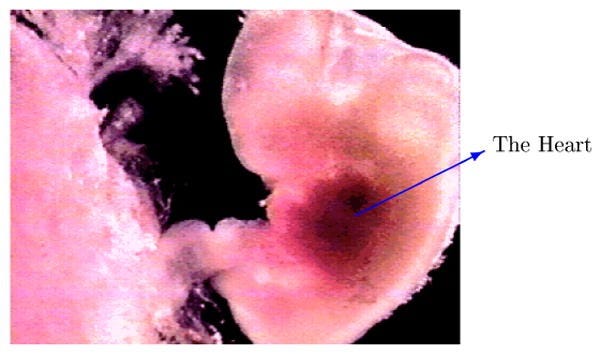
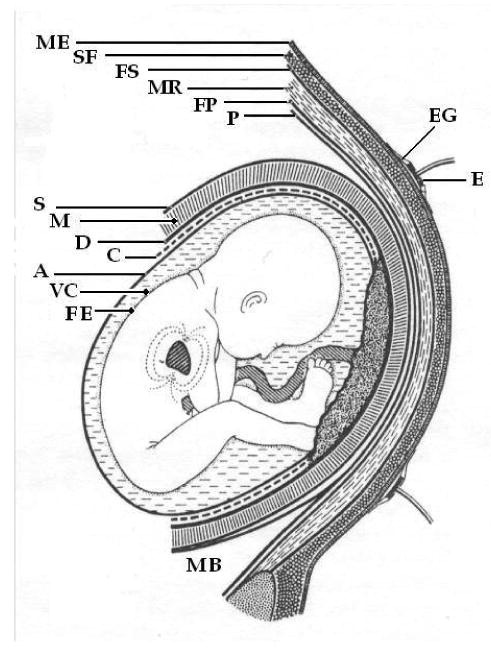
The result is a strange but entirely physical arrangement: an electrically active heart beats at the center of a body immersed in conductive fluid, while an insulating coating electrically separates much of its surface from those surrounding waters. Mott’s mythological imagery of sons of the eternal mother born from fire and lightning becomes easier to visualize.
In his 1964 book The Universal Design of Creation, Mott proposed a new physiological mechanism for the “fetal skin feeling” he had already developed through his earlier work. He suggested that electrical activity originating in the fetal heart was contained at the fetal surface by the insulating vernix and ultimately conducted away through the umbilical cord toward the placenta. Modern fetal electrophysiology reveals a remarkably similar physical arrangement. Vernix does insulate the fetus, and the umbilical cord is one of the preferred pathways by which electrical signals from the fetal heart escape that insulation.
Mott consequently came to regard the heart as the nucleus of the fetal organism and the skin as the surface upon which its activity was registered, producing what he imagined as a diffuse sense of radiance extending in all directions. He interpreted its passage toward the placenta as a rhythmic depletion of this nuclear feeling, followed by its renewal with the next beat of the heart. Here the parallel with the sun becomes clearest: the Shining One is alternately radiant and depleted, rising into fullness and sinking again into darkness, while the fetal heart repeats its own cycle within the encompassing world of the womb.
The Universal Design of Creation
“All ancient peoples had a strong interest in the origin of the world: in cosmology on one hand and in the baby (embryology) on the other.” —Franz Renggli
Bruno Hugo Stricker arrived at remarkably similar conclusions to Mott through the study of Egyptian religion. His most extensive analysis concerned the Egyptian Book of the Earth, a funerary composition from the tomb of Ramesses VI which he called an “Embryological Treatise,” interpreting its sequence as an account of human development beginning with conception and ending with birth.
Stricker perceived the Egyptians as projecting what they knew of human generation outward onto the creation of the world, while cosmology provided a language through which the generation of man could itself be understood. Renggli summarizes the relationship succinctly: “Cosmology and embryology, macrocosm and microcosm, are compared at will.”
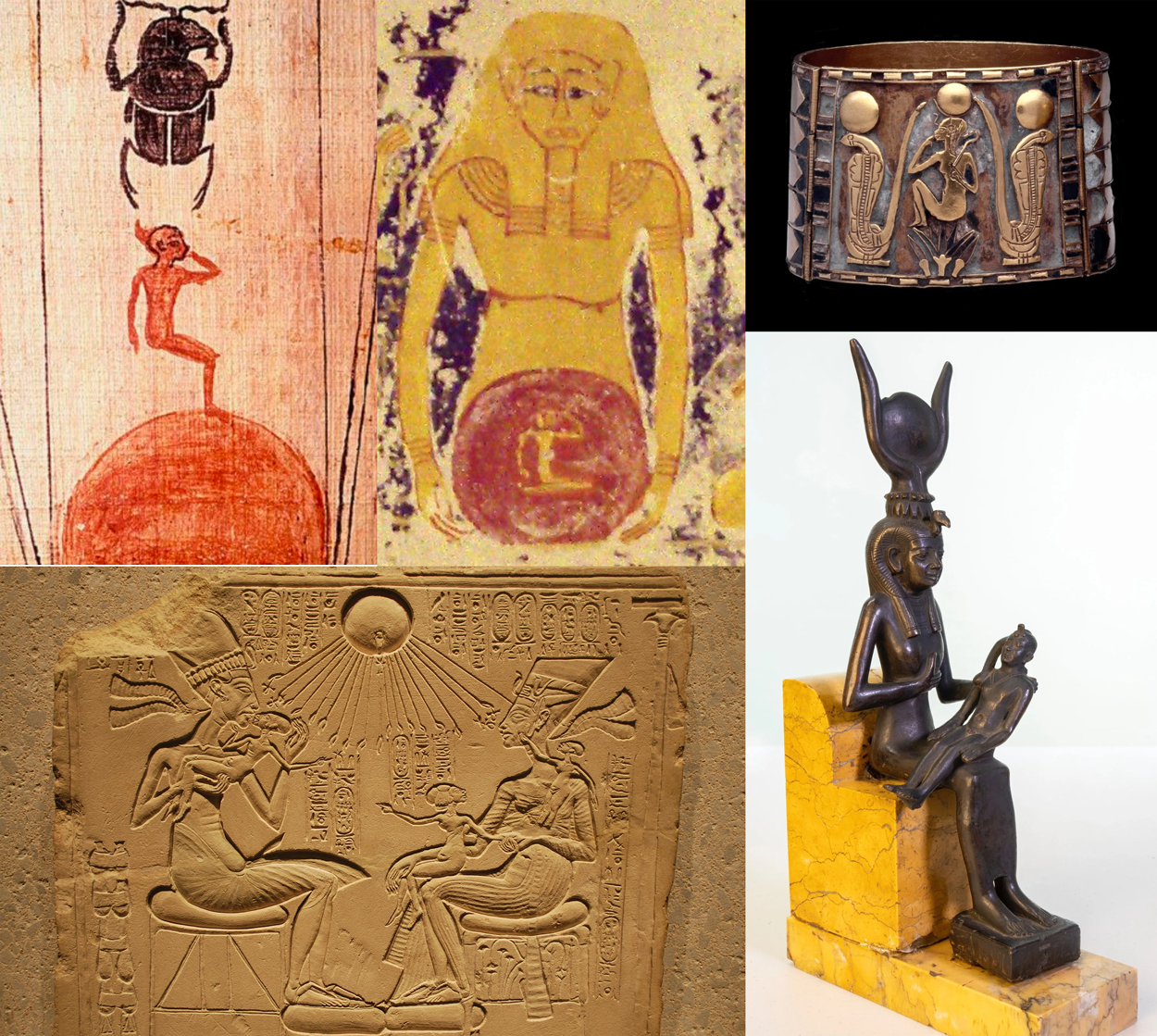
The solar imagery is particularly striking in light of Mott. In Renggli’s account of Stricker, the Egyptian world is itself configured like an enormous womb, the earth enclosed by the primordial waters as the unborn child is enclosed by amniotic fluid. Each morning the sun emerges from the goddess Nut as Horus, born anew from the maternal body.
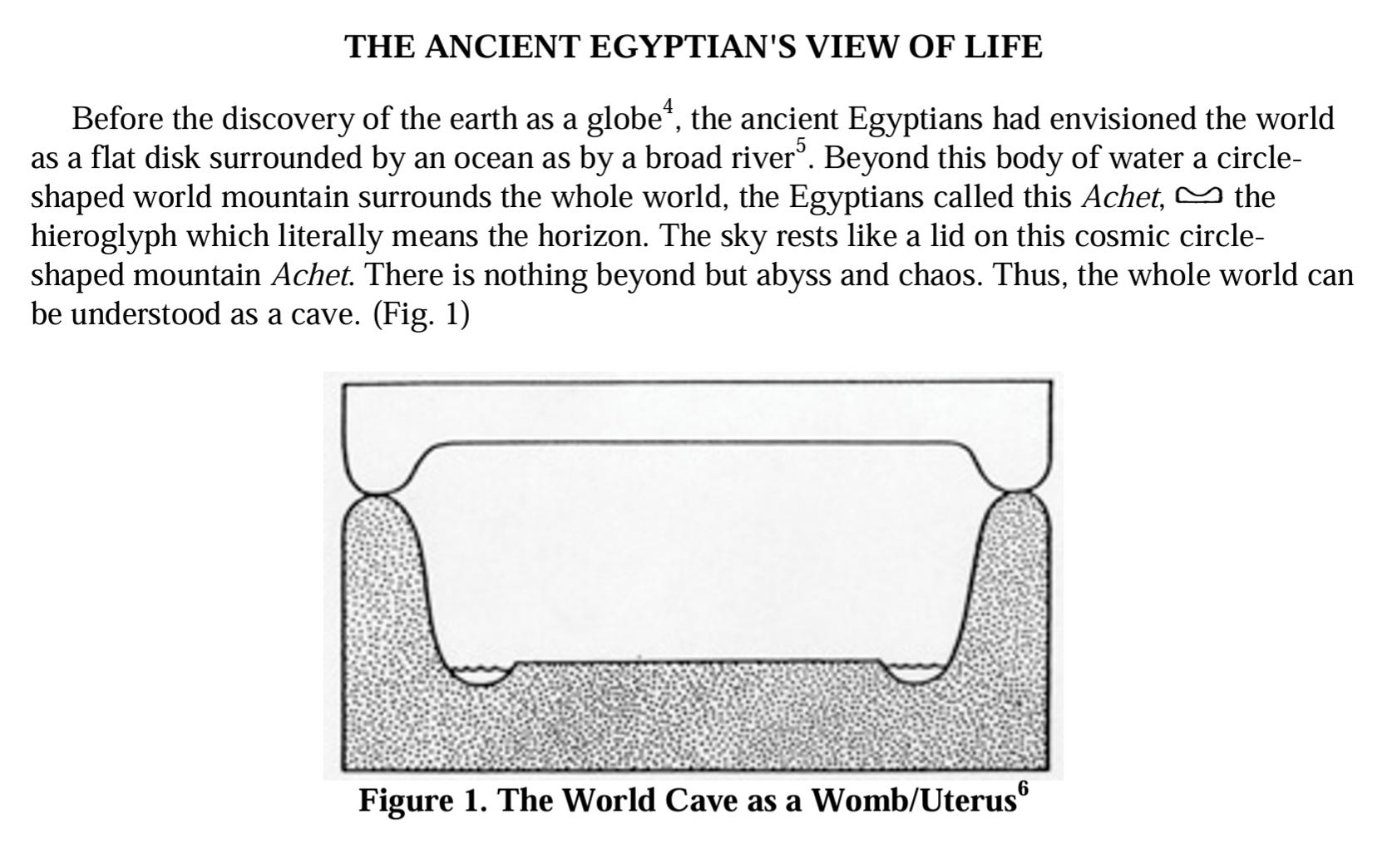
From this perspective, the Shining One is larger than any one of Mott’s examples. Apollo, Baldr, and the innumerable radiant youths, fiery infants, and solar heroes of mythology belong to an image so familiar that its familiarity can conceal its strangeness. Why should divinity so often appear youthful and radiant? Why should the divine child be associated with fire, gold, lightning, or the rising sun?
This returns us to the ancient habit of analogy with which we began. Myth did not have to choose whether an image belonged to the heavens, the earth, or the human body. If the same principles of generation were understood to operate through them all, then to describe one was already, in some measure, to describe the others. Sunrise could be birth, birth could be creation, the fiery hero could be the sun returning to the horizon, and the unborn child fighting to be born.
More Works Cited & Further Reading
Francis J. Mott
1934 – Consciousness Creative
1960 – The Nature of the Self; Mythology of the Prenatal Life
1964 – The Universal Design of Creation
Carl Jung, 1916 – Psychology of the Unconscious
Leo Frobenius, 1904 – Das Zeitalter des Sonnengottes (The Age of the Sun God)
Franz Renggli, 2002 – “The Sunrise as the Birth of a Baby: The Prenatal Key to Egyptian Mythology”
Li et al., 2022: Affective touch in the context of development, oxytocin signaling, and autism
Wakai et al., 2000: Transmission of electric and magnetic foetal cardiac signals in a case of ectopia cordis: the dominant role of the vernix caseosa
Thumbnail art by Arthur Machado aka Tù.úk’z