

Teeth are the only part of the human body that visibly replace themselves at a single, specific moment in every individual’s life. From the present day deep into prehistory, the transition from temporary to permanent teeth has been marked by ritual across the world, with lost teeth exchanged for coins, tossed onto rooftops, or buried beneath homes. Small objects such as coins, seeds, beans, and pebbles frequently orbit myths of initiation and transformation, suggesting that these familiar rituals are part of a much older relationship between bodily development, mental transformation, and the symbolic world.
Through the lens of modern science, the weight attached to teeth in folklore appears less arbitrary. Teeth are closely linked to cognition and memory, and the transition to permanent teeth occurs at a time of major cognitive development. They are also among the most durable parts of the human body, remaining intact for tens of thousands of years and serving as a primary source of evidence in archaeology and paleoanthropology.
Within their mineral structure, they preserve records of malnutrition, disease, stress, diet, and even migration patterns of ancient humans. This is possible because enamel forms in incremental layers during early development and does not remodel, preserving a permanent record of physiological stress. In some cases, they retain molecular traces that allow scientists to reconstruct genetic relationships and speculate with more precision what ancient life was like. We largely owe our understanding of our own past as a species to ancient teeth.
It is perhaps not surprising, then, that some of the oldest myths we have treat teeth as something more than ordinary fragments of the body. They are seeds of life, encoded with memories of ourselves.
Ritual & Initiation
At a certain age, the child’s teeth loosen and fall away, replaced by new ones that will remain unchanged for life. It is a quiet but decisive transformation, visible in the body but extending beyond it, marking a shift in how the child experiences the world and their place within it.
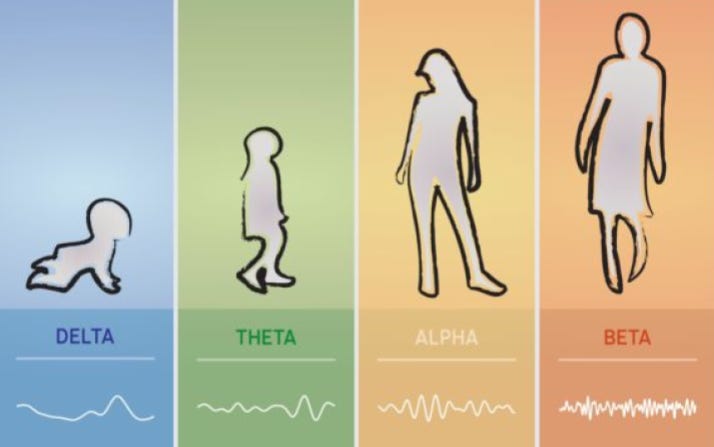
For the child, the loss of baby teeth coincides with a broader internal shift. Early childhood is characterized by a greater dominance of theta brainwave activity, associated with immersion and imaginative engagement. As development progresses—around the same period that permanent teeth emerge—alpha activity becomes more prominent, corresponding to increasing attention and the formation of internal representations. This helps explain why younger children can ‘make believe’ so completely that their imagination becomes their reality. As this shift unfolds, the child moves toward a more structured mode of thought, accompanied by social integration, the development of reason, and a more stable sense of personal identity, marking significant changes from the primarily immersive experience of earlier childhood. Developmental psychologist Jean Piaget identified this transition as the shift into the “concrete operational stage,” when the child begins to consistently separate imagination from external reality.
There is a Japanese saying that embodies this phenomenon: “A child is a kami until age seven,” or “before seven, with the gods.” Before this initiatory stage, when permanent teeth begin to emerge, children exist in a more impressionable, fluid state, and are, in a sense, much more spiritual beings. Their cognition is highly receptive, their identity is still forming rather than fixed, and their experience of the world is less sharply divided between self and environment.
To ancient observers of growing children, it must have seemed purposeful that this mental switch coincides with the replacement of baby teeth with deeply rooted permanent teeth. Like a snake sheds its skin, children shed the teeth that they first developed in utero. They wean from the nursing period and begin to form their personality and fend for themselves in social settings.
In many traditional cultures, early childhood is understood as a period in which the child is not yet fully individuated, but still closely tied to ancestral or spiritual continuity. Among those who have explored this idea, researcher Marie Cachet interprets the transition of teeth in initiatory terms. In cultures shaped by reincarnation beliefs, it can be understood as the ancestor symbolically “taking root” in the child-initiate.
When a child loses their first baby tooth, they still believe in the tooth fairy. By the time the last are gone, around age ten, that belief has disappeared. The threshold has been crossed.
These observations are where rites of initiation originate. Nature supplies the framework, and man builds his dwelling. There is no better time to effectively integrate the child into the continuation of the family, the tribe, the tradition, than the time of the changing of teeth. This example from Arthur Van Gennep’s Rites of Passage highlights its universality:
“Among certain southern Bantu groups, the eruption of the second teeth marks a decisive break in the child’s life. The mat on which mother and child once slept is burned, the child is separated from women, and instruction begins. What is merely a biological process becomes the basis for social reclassification, the transitional period between baby and permanent teeth marking a threshold the child is crossing.”
In traditions outside of Europe and North America, teeth are thrown onto rooftops with spoken wishes for strong replacements, buried beneath the home, or given to animals—often mice or rats—whose ever-growing teeth make them natural agents of renewal. The practices differ in form, but all follow the logic that the tooth retains its connection to the child even after it has left the body, and must be properly transferred rather than carelessly discarded.
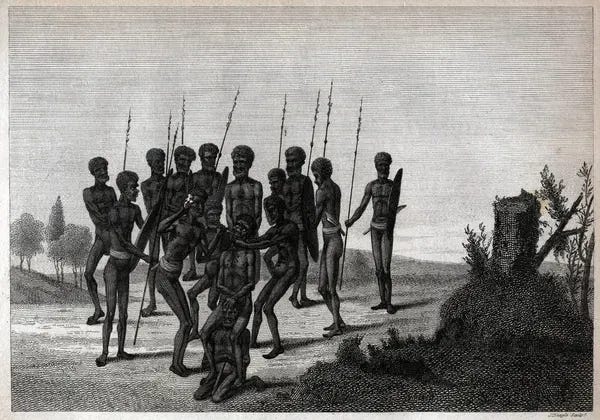
In The Golden Bough, James Frazer noted that fragments of the body—hair, nails, afterbirth, and teeth—are often treated with particular care across cultures. Rather than reducing this to fear of misuse, it may reflect a broader intuition that such fragments remain bound to the person even after separation. Teeth follow this pattern, but with the important distinction that they mark a visible shift in the life of the individual.
Myth & Symbol
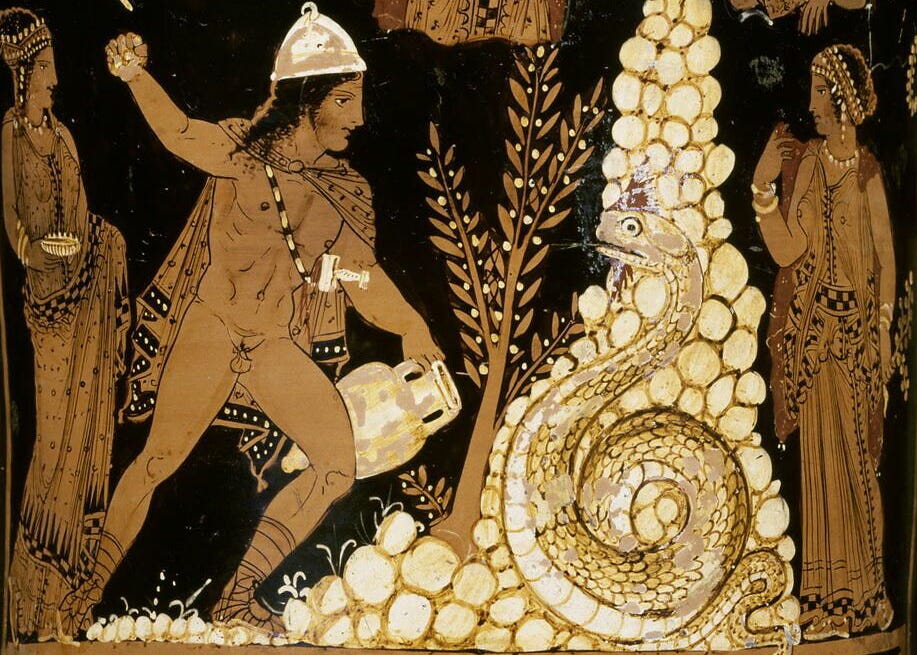
Greek myth tells the story of young Cadmus, who, in archetypal fashion, slays the cave-dwelling dragon by piercing its neck after it kills his men. He then hears the voice of Athena, who instructs him to remove the teeth from the dragon’s mouth, and sow them in tilled soil like seeds. From the ground, a new crop of men called Spartoi (“sown men”) emerges armed and ready for battle.
A fantastic image, not extraordinary for mythology, but it demonstrates—explicitly in this case—the symbolic power given to teeth. They push through the soil as seeds would, and as they do in the mouths of children. Cadmus had lost his men to a mysterious, threatening force, which turned out to be the same force that provided new, more permanent men, who helped him establish himself and found the city of Thebes, wherein lies an analogy for the symbolic rebirth that occurs around the change of teeth.
In another Greek tale, after a great flood has destroyed humanity, Deucalion and Pyrrha are instructed to “throw the bones of their mother” behind them. Interpreting this as the stones of the earth, they cast them over their shoulders, and from these stones new men and women arise. As with the sowing of dragon’s teeth, life continues not through flesh, but from what remains after it—in this case, durable fragments that persist beyond the destruction of the living body.
These motifs often appear through symbolic placeholders—seeds, beans, pebbles, coins, and bone fragments—each tied to themes of growth, memory, guidance, and patience. A common structure runs through these stories: life arising or prevailing through small, enduring objects that would otherwise seem inconsequential.
In Cinderella, the ancestral heroine is tasked with separating lentils or grains from the ashes. This is a seemingly humble task, but ultimately determines her transformation. Ash is what remains after fire, but also acts as a preservative for what it holds. From this indistinct mass, small, durable seeds must be recovered and distinguished. In this sense, the lentils function as the surviving elements of identity, drawn out from dissolution and prepared for renewal. Only once they are gathered can Cinderella be transformed.
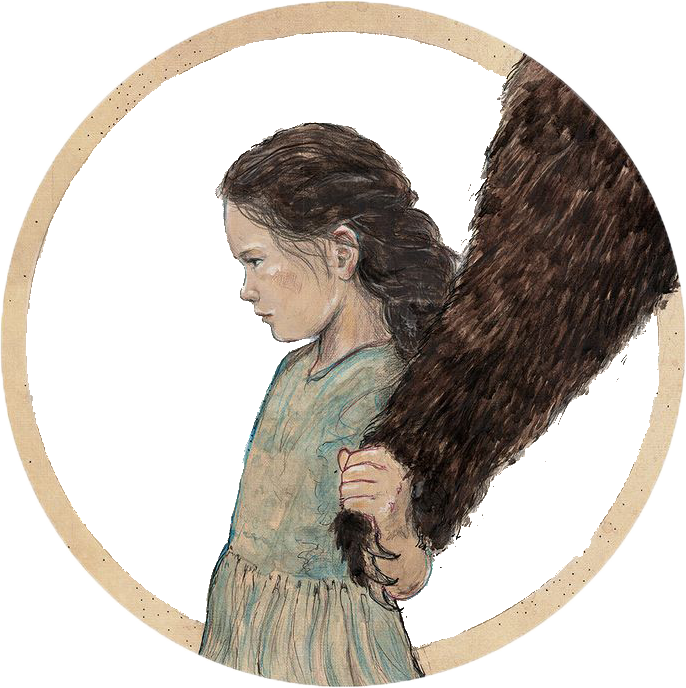
One way to approach this recurring motif is through the work of Cachet, who has suggested that such objects symbolically parallel the role of teeth in human development. In this reading, they represent continuity and the emergence of a more permanent form, namely the ancestor within the child-initiate.
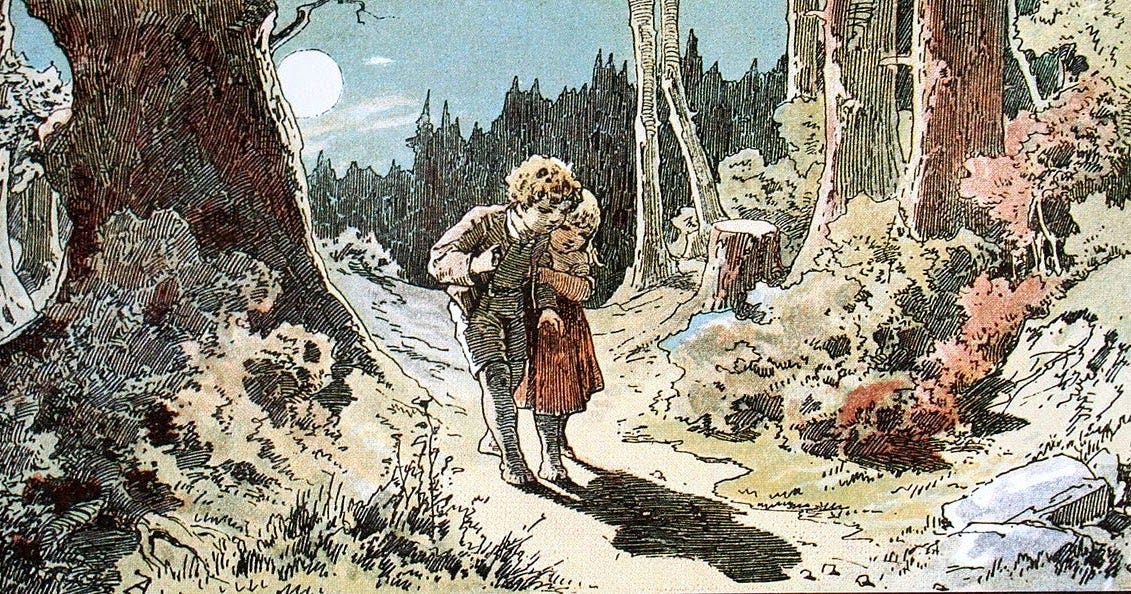
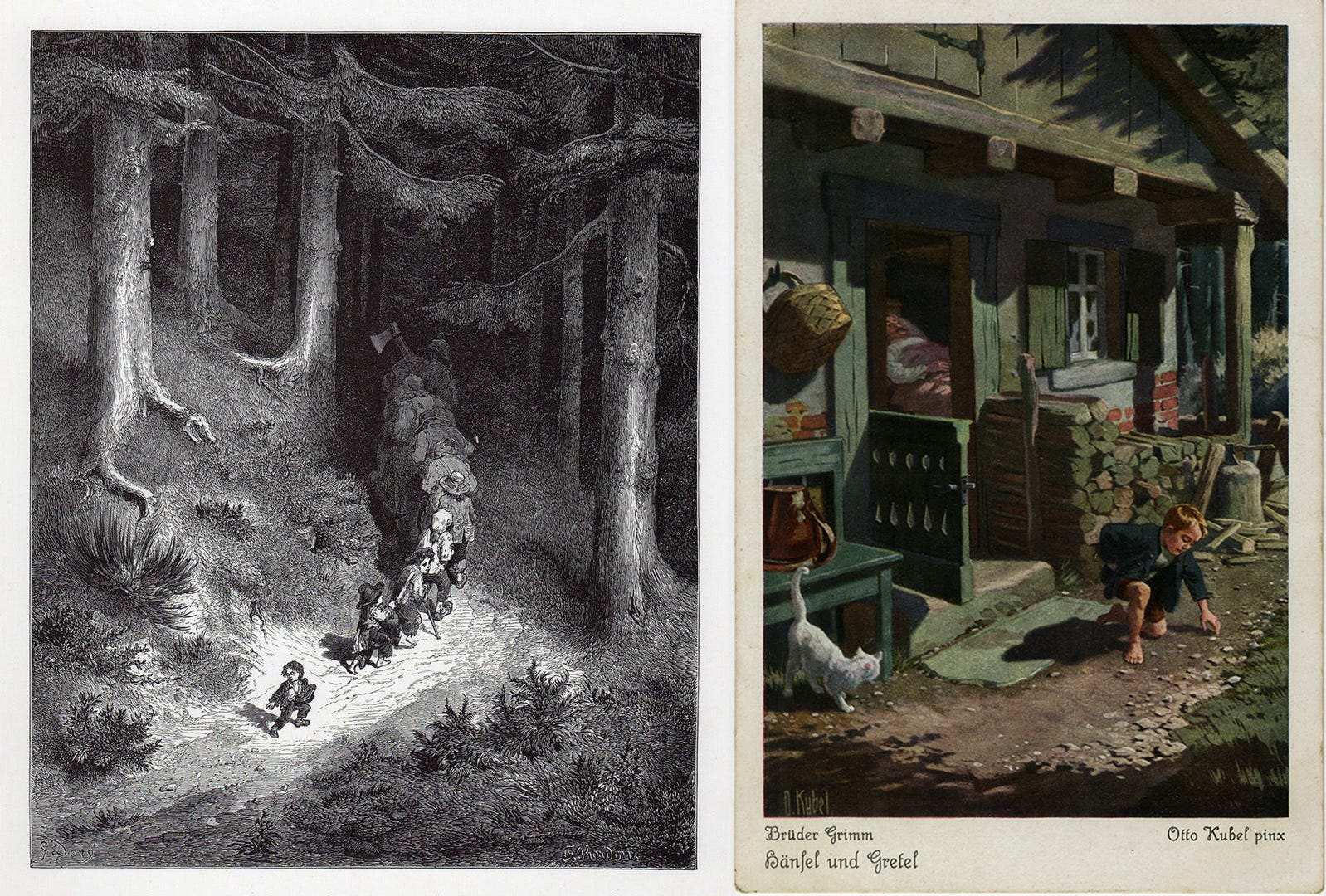
This interpretation illuminates certain aspects of familiar stories. In Hansel and Gretel and Tom Thumb, children are guided through the forest by a trail of white pebbles. When replaced by crumbs, which are consumed and disappear, they get lost. In Jack and the Beanstalk, a handful of beans traded to Jack for an old cow (remember the correlation between losing teeth and the end of the weaning period) produces a towering structure that initiates him into a new world.
In ancient Rome, during the festival of Lemuria, beans were cast behind the body to appease the spirits of the dead. Pythagorean traditions treated beans as sacred or forbidden, associating them with the souls of the departed. In an Italian variant of Little Red Riding Hood, the child is told to eat beans from a pot, only to find that they are too hard because they are, in fact, teeth. The distinction collapses entirely. There is clearly a thread of association with these ‘lookalike’ objects that Cachet argues are used in myth as symbols of initiation and ancestral return. Another example cited by Cachet is the European king cake tradition, in which a small object is hidden within a cake. The child who bites into it is crowned, echoing the moment when a child loses a tooth by biting into food.
Through myth and tradition, form is given to processes that are otherwise only experienced in the body. Meaning is given to universal experiences; religion and biology are intertwined, imbuing the ordinary with the gravity of immorality and self-understanding that defines the essence of the human experience.
Mind & Memory
The symbolic weight of teeth also appears in the inner life. Dreams of losing teeth, whether through crumbling, breaking, loosening, or rotting, are among the most commonly reported across cultures, often arising during periods of instability or reorientation. For the psychoanalysts, these images were understood as responses to moments when something established begins to loosen and give way to a new form. Their prevalence suggests that the experience of losing teeth leaves a lasting imprint that the mind returns to when confronting later changes.
This connection between the change of teeth and the formation of the inner life has also been noted in more recent educational theory. In the Waldorf tradition, founded by Rudolf Steiner, the emergence of permanent teeth marks a decisive shift in child development. Prior to this stage, Steiner argued, the child does not yet form inward images in the same way, but lives in a state of immediate perception and imitation, closer to the world, and less differentiated from it. He echoes the same concept we saw earlier in Japanese folk culture: that children are kami or are “with the gods” until the age of seven:
“Until the change of teeth, a human being lives entirely in the senses. A child surrenders entirely to the environment and is thus by nature a religious being.”
What Steiner describes in pedagogical terms aligns with a broader pattern: before the change of teeth, the child remains closely integrated with immediate experience; afterward, an inner life begins to take shape. Memory becomes pictorial, experience becomes something that can be held and recalled, and identity stabilizes.
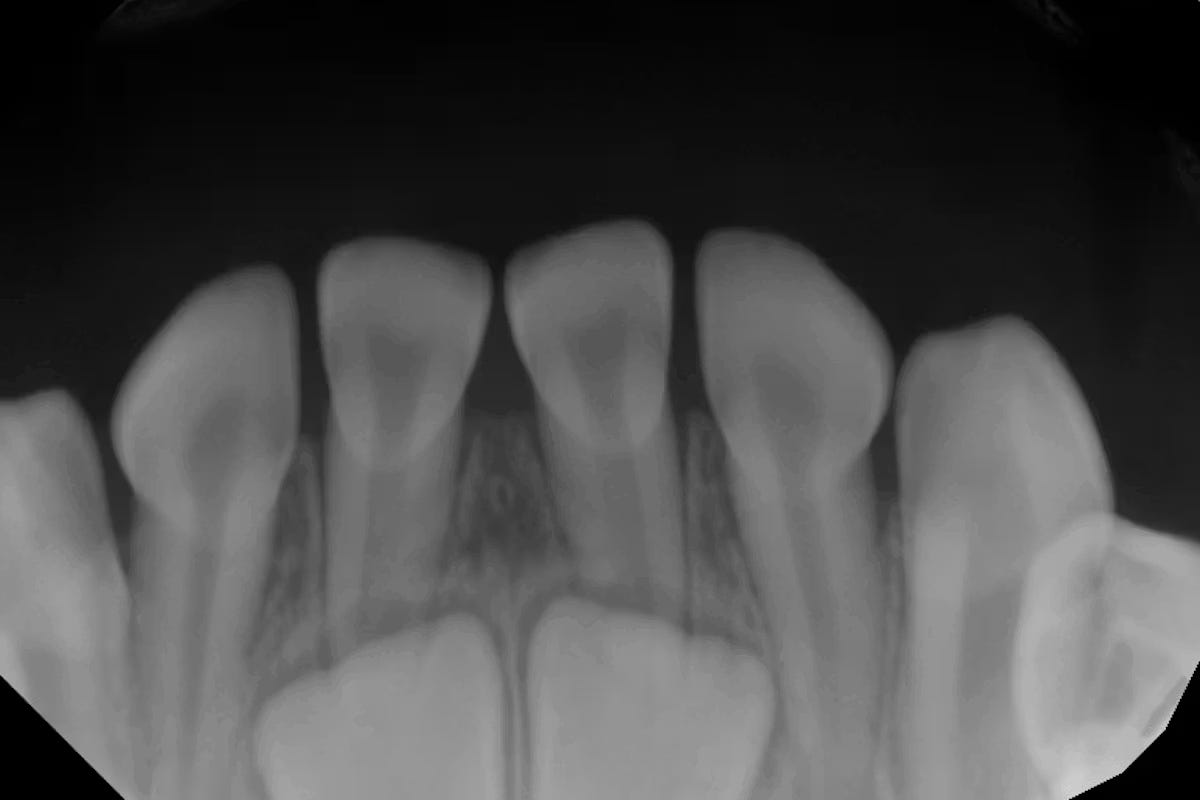
Understanding this shift helps clarify the commonness of tooth-loss imagery in dreams. The change of teeth marks both a physical shift in the body and a reorganization in how experience is held and recalled. What was once lived directly becomes something that can be revisited and reshaped internally. In this sense, the event establishes a pattern: something familiar gives way, and a more stable structure takes its place. This pattern—first encountered in early childhood—remains available to the mind as a formative structure through which later changes are registered.
It is during the period between the change of teeth and adolescence, Steiner argued, that fairy tales and legends take hold most deeply, emerging as images that meet the child’s developing inner life. Rather than being analyzed or interpreted, they are absorbed, forming part of the structure through which the child begins to understand the world. The symbolic language of myth, which appeared outwardly in the previous section, now finds its counterpart within.
Teeth & The Nervous System
If this shift in perception and memory coincides so consistently with the change of teeth, it raises the further question of whether this pattern is purely symbolic or reflects a broader developmental reorganization.
Modern neuroscience does, in fact, observe a significant transition in early childhood, as patterns of brain activity begin to consolidate. In infancy, cognition is largely driven by immediate sensory engagement and imitation of the surrounding environment. As the child approaches the age at which permanent teeth begin to emerge, this mode gives way to more structured forms of attention and recall, allowing experience to be stabilized and revisited rather than simply lived through.
One of the clearest markers of this shift is the development of autobiographical memory. Most adults retain few, if any, memories from before the age of five or six—a phenomenon known as childhood amnesia—which is caused by the immaturity of the neural systems responsible for organizing memory into a stable narrative. As the hippocampus and related structures continue to develop during early childhood, the child gains the ability to encode and retrieve long-term, self-referential memories. Around the same period that permanent teeth erupt, memory becomes anchored to a continuous sense of self.
Teeth themselves are not passive within this process. They are among the most densely innervated structures in the body, connected through the trigeminal nerve to regions involved in sensation and perception. Within the dental pulp, researchers have identified stem cells capable of differentiating into multiple tissue types, including cells with neural characteristics. These cells originate from the neural crest, the same embryonic structure that gives rise to key components of the nervous system and face. What appears as a hardened, mineral structure retains a latent connection to the body’s developmental pathways, linking it directly to the formation of the nervous system.
There is also evidence that the functional use of teeth plays a role in cognitive health. Studies have shown that tooth loss and reduced chewing ability are associated with increased risk of cognitive decline and conditions such as Alzheimer’s disease. Chewing stimulates neural activity, increases blood flow to the brain, and engages pathways connected to memory and attention.
If teeth are so closely bound to these integral aspects of the individual, they are also uniquely suited to persist beyond it. Unlike bone, which can heal and remodel, teeth do not regenerate. Their structure is primarily mineral, which gives them a hardness and permanence more akin to stone than to living bone.
Deep Time
Teeth are one of the primary ways we understand ancient humans. They persist long after soft tissue has disappeared, preserving a record of early life across tens of thousands of years. Much of what is known about Neanderthals and early human populations comes from dental remains. In fact, much of what has informed the “humanization” of Neanderthals in the last fifteen years of anthropology has come from revelations from the dental record.
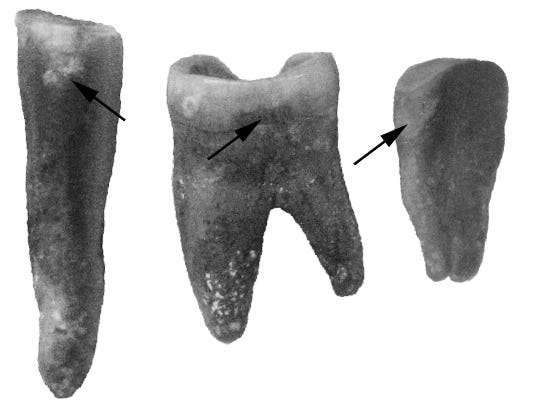
Through the analysis of enamel, plaque, and microscopic wear, researchers have reconstructed diets, environments, and behavior. Starch grains preserved in dental calculus have shown that Neanderthals consumed a wide variety of plant foods, including cooked grains, challenging the long-standing image of them as purely meat-eating hunters. Isotopic analysis of teeth has revealed patterns of migration, while wear patterns and grooves suggest that teeth were used as tools, functioning as a kind of “third hand” in daily life. Even signs of dental manipulation indicate self-care and practical knowledge.
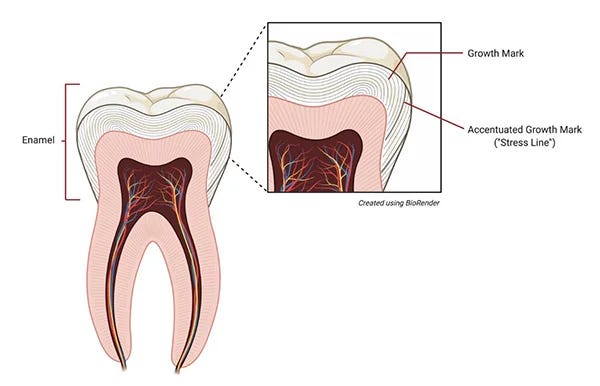
This record is made possible by the structure of enamel itself, which forms in layers during early development, much like the rings of a tree, and does not change once formed. Each layer captures a moment in time, preserving traces of nutrition, stress, and environmental conditions experienced during childhood. Researchers can read these microscopic growth lines to identify periods of hardship, such as seasonal stress or malnutrition, as well as patterns of weaning and early development. Analysis of microbiomes extracted from teeth has revealed evidence of plant-based medicines, including compounds associated with natural antibiotics and pain relief, suggesting not only dietary diversity but also a knowledge of healing. Findings like these have steadily shifted the image of Neanderthals from a crude intermediary form to a highly adaptive and behaviorally sophisticated human population.
For paleoanthropologists, teeth are a literal manifestation of the trail of white pebbles that lead characters like Hansel and Gretel and Tom Thumb through the forest and safely back home. Without their durability, the archaeological record would be far more fragmentary, and our understanding of where we come from far less certain.
And ultimately, these clues from our deep past, no larger than a fingertip, once belonged to an individual with their own personality and experience. Just like all of us, they crossed a threshold, around age seven, into permanence, taking on something that will go on unchanged. By surviving early childhood, we all participate in a continuity that extends beyond our singular lives. Our individuality, which crystallizes at this time, is also being encoded onto our enamel in a way that can be interpreted long after our lives have ended. They tell part of our story for us.
What will our contribution to this long and winding trail be? Research on hunter-gatherer populations, supported by archaeological evidence, shows that tooth decay is relatively rare under conditions our ancestors lived in during the Paleolithic, becoming widespread only with modern changes in diet and environment. Today, despite advances in dental technology, rates of decay remain high. The capacity to repair damage has grown, but the conditions that support long-term resilience have diminished. Will it be evident to posterity that our health was sacrificed, adapted to an unnatural system?
Or will the unchanging elements of our collective psyche overshadow the physical deficits of our age? No matter our legacy, what will persist are the fairy tales, myths, and customs whose origins are so deep, they’re untraceable. They don’t rely on our understanding to survive—we are programmed to pass them on—to interpret them however makes us feel they’re worthy of preservation. Under their dreamlike facade, our traditions have a baked-in solution of biology, symbol, and narrative that maintains the knowledge of our ancestors like embers under a pile of ash.
The image of the white pebble trail in Hansel and Gretel is simple, but it captures the essence of the idea that what persists allows for return. The teeth, sprouting like seedlings from spring soil, mark the ancestral spirit manifesting itself in the child, one that existed long before the child’s birth, and will last long after the life of the child has ended. Through their persistence, we come to understand where we have been. We trace our way back, not only to our origins as individuals, but to the deeper story of the human species itself.
Works Cited & Further Reading
Arthur Van Gennep, 1909 – The Rites of Passage
Kunio Yanagita, 1945 – About our Ancestors
Marie Cachet, 2017 – The Secret of the She-Bear, Paganism Explained
Rudolf Steiner, 1930 – The Roots of Education (PDF)
James George Frazer, 1890 – The Golden Bough
The Conversation: Why Do People Have Baby Teeth and Adult Teeth?
Smithsonian Insider, 2011: Starch grains found on Neandertal teeth debunks theory that dietary deficiencies caused their extinction
Smithsonian, 2017: Scientists Delve Into Neanderthal Dental Plaque to Understand How They Lived and Ate
Stefan Milo, 2026: The hunt for the oldest ‘human’ genetics (video)
This is so poignant to me right now as my first child has just cut her first two teeth, a fantastic read, thankyou ❤️❤️❤️
Wow so enjoyed reading this! Agreed the tree ring comparison is fascinating- and also crazy that our decay levels are so high. Maybe the paleo diet is where it’s at.